
Aphrodite by Phoenicia Rogerson: A Witty Mythology Retelling
A fresh 2026 retelling of the goddess and heroine of Mount Olympus


Disclosure: As an Amazon Associate, Cheap4stuff.com earns from qualifying purchases. Read our affiliate disclosure.
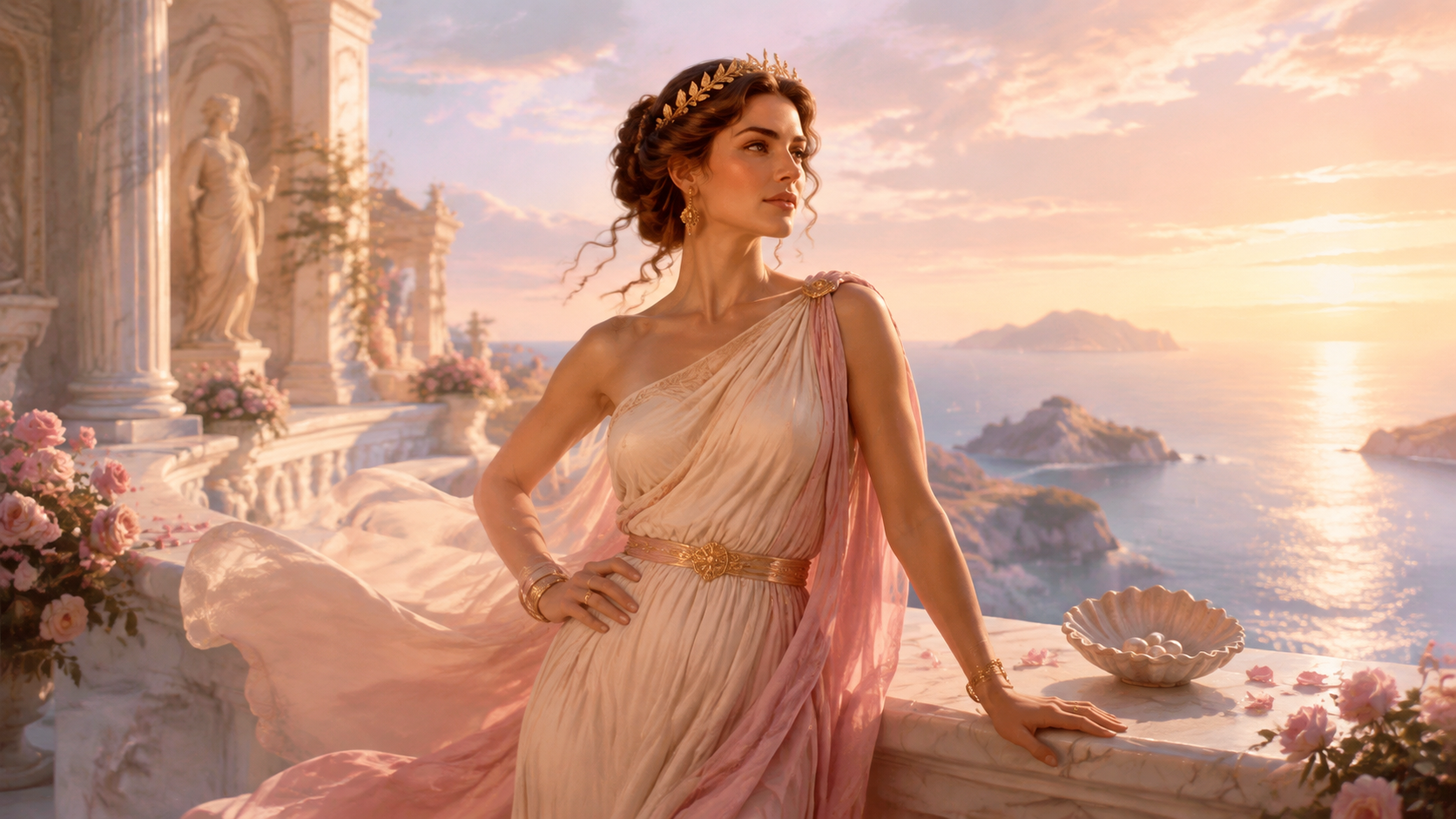
Aphrodite by Phoenicia Rogerson is a witty feminist retelling that places the goddess of love at the centre of her own story. Instead of treating Aphrodite as a decorative figure in somebody else’s myth, the novel explores how she builds influence, protects her independence and navigates the dangerous politics of Mount Olympus.
This spoiler-light guide explains the book’s premise, themes, tone and available formats without revealing its major turns. It should help readers of Greek mythology retellings decide whether the novel belongs on their reading list or would suit their next book-club discussion.
What is Aphrodite by Phoenicia Rogerson about?
The Amazon description introduces an Aphrodite who readily admits that she can lie. She begins with legendary beauty but little of the authority enjoyed by the established Olympian gods. Through nerve, intelligence and carefully chosen stories, she earns a place among them and gains the attention of Zeus.
That success brings a problem. Zeus is immensely powerful, insecure and accustomed to control. Aphrodite wants security and status, but she does not want her future to depend on keeping a tyrant pleased. The resulting struggle gives the familiar mythology a sharper focus on agency, identity, ambition and freedom from fate.
This is fiction inspired by Greek mythology rather than a reference book or a literal reconstruction of ancient sources. Its appeal lies in taking recognisable gods, rivalries and legends and viewing them through a contemporary narrative voice.
Why put Aphrodite at the centre?
Aphrodite is often reduced to beauty, romance or temptation. Making her the narrator creates room to ask more interesting questions. How does a person turn the quality others value into a source of power? What happens when charm and intelligence become survival tools? Can somebody gain influence inside an unfair system without becoming part of that system?
Those questions make the book relevant to readers who enjoy modern retellings that reconsider whose voice was missing from the traditional version. The setting may be ancient Greece, but the concerns around reputation, autonomy, loyalty and unequal power remain recognisable.
Tone, storytelling and reading experience
The publisher positions the novel as a witty book-club retelling. The product description combines high-stakes conflict with a confident, self-aware voice, while reader feedback on Amazon frequently mentions humour, multiple perspectives and the way the story makes the gods feel flawed and immediate.
Readers looking for a solemn academic treatment of mythology may prefer a classical history or reference title. This novel is more likely to suit somebody who enjoys character-led fiction, modern dialogue and old myths reworked with a playful edge.
Who might enjoy this book?
- Readers who enjoy feminist retellings of Greek mythology.
- Book clubs looking for themes involving power, identity and freedom.
- Fans of character-led fantasy with humour and a contemporary voice.
- Readers interested in stories that reconsider famous myths from a woman’s perspective.
- Anyone who enjoyed Phoenicia Rogerson’s earlier Greek mythology novel, Herc.
Book details
Amazon’s product information for the linked edition lists the following details. Formats and availability can change, so confirm the current options on the retailer’s page before ordering.
| Author | Phoenicia Rogerson |
|---|---|
| Publisher | HQ |
| Publication date | 14 August 2025 |
| Language | English |
| Print length | 480 pages |
| ISBN-10 | 0008589909 |
| ISBN-13 | 978-0008589905 |
| Formats shown by Amazon | Kindle, audiobook, hardcover and paperback |
Ideas for a book-club discussion
A modern mythology retelling works well for group discussion because readers can compare the novel with versions of the myth they already know. These questions offer a useful starting point without requiring detailed knowledge of the classics:
- How does giving Aphrodite her own voice change the way you view her?
- Where is the boundary between clever self-preservation and manipulation?
- How do beauty, reputation and storytelling operate as forms of power?
- Which parts of the ancient setting feel most relevant to modern life?
- Does a humorous voice make the darker parts of a myth more approachable?
What to check before buying
Choose the format that best fits how you read. A hardcover may suit collectors or gift buyers, while a paperback is easier to carry. Kindle offers adjustable text and immediate delivery, and an audiobook may suit commuting or listening at home. Check the selected format carefully because product pages can display several editions together.
Also confirm the current price, delivery estimate, seller and return conditions directly on Amazon. Cheap4stuff.com does not set Amazon’s prices or availability, and these details may change after this guide is updated.
Frequently asked questions
Is Aphrodite a factual mythology book?
No. It is a work of fiction that reimagines Greek mythology. Readers seeking primary myths, translations or academic commentary should use a dedicated classics reference alongside the novel.
Who wrote Aphrodite?
Aphrodite was written by Phoenicia Rogerson, who also wrote Herc, another novel that revisits Greek mythology from less familiar viewpoints.
Is it suitable for a book club?
Its themes of ambition, identity, power, freedom and storytelling provide several routes for discussion. Groups can also compare the novel’s version of Aphrodite with older myths and modern retellings.
Where can I buy Aphrodite by Phoenicia Rogerson?
The button below opens the book’s Amazon.co.uk product page. It is an affiliate link, which means Cheap4stuff.com may receive a commission from a qualifying purchase at no additional cost to you.
For more reading and entertainment articles, browse the Culture section.